Understanding the Shift
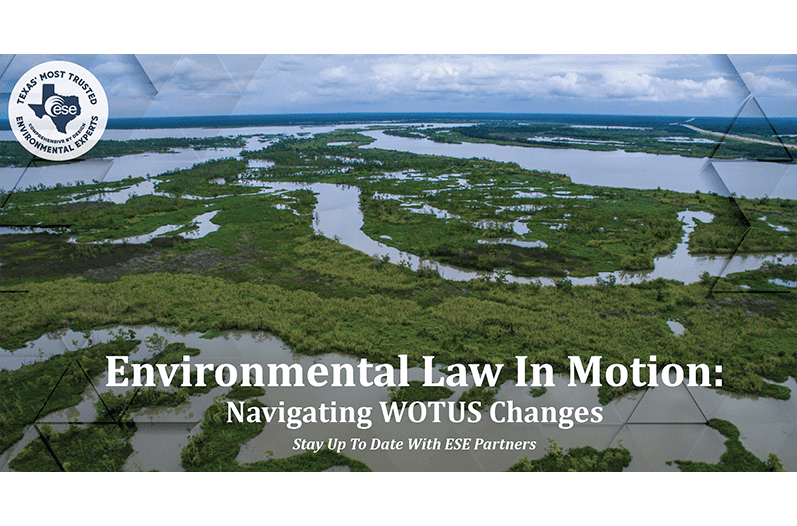
The 2023 Sackett v. Environmental Protection Agency ruling changed how the Clean Water Act is applied by limiting which wetlands and waters receive federal protection. Under this decision, only wetlands with a clear and continuous surface connection to “waters of the United States” (WOTUS) are federally regulated.
For Texas, where hydrology can vary dramatically across regions from ephemeral streams in West Texas to coastal wetlands in the Gulf, this shift means many features once regulated by the U.S. Army Corps of Engineers may no longer be considered jurisdictional.
Why This Matters for Texas Projects
Across the state, developers, lenders, and environmental professionals are reviewing past wetland delineations and jurisdictional determinations to make sure they match the current federal guidance. In many cases, the U.S. Army Corps of Engineers is now requesting that previously submitted delineation reports be updated to reflect the Sackett ruling and the latest interpretation of WOTUS.
This shift may affect:
-
Residential and commercial development projects that once required Section 404 permits.
-
Linear infrastructure such as pipelines, fiber networks, and transmission lines crossing ephemeral drainages.
-
Renewable energy and industrial site development.
This change may also create new development opportunities. Properties that were once considered too constrained by regulated wetlands could now be viable for construction, expansion, or investment.
If past determinations are not updated, projects could experience avoidable delays.
Balancing Opportunity and Stewardship
While the Sackett decision may streamline permitting for certain projects, it also places greater responsibility on developers to document environmental conditions accurately and transparently. A sound environmental due diligence process still protects against risk, even when federal oversight lessens.
At ESE Partners, our team supports clients by:
-
Reviewing and updating wetland delineations and prior jurisdictional determinations.
-
Coordinating with agencies to confirm compliance.
-
Providing clear, defensible documentation for lenders and investors.
Moving Forward Responsibly
The narrowing of WOTUS jurisdiction doesn’t remove the need for environmental accountability, it simply reshapes the framework. As Texas continues to grow, the best outcomes will come from teams that understand both the letter of regulation and the spirit of environmental stewardship.
ESE Partners helps clients interpret these shifts with precision, ensuring every decision supports responsible progress across the state.