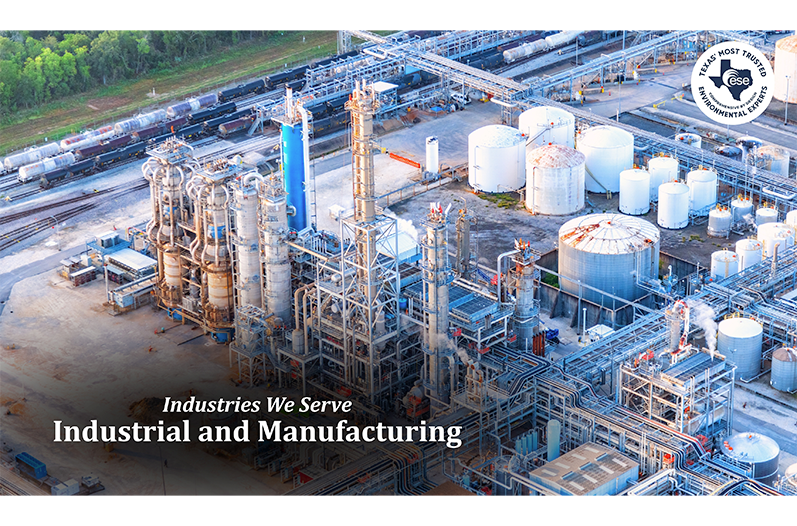
Industrial and manufacturing facilities play a critical role in supporting Texas’ economy and supply chains. As development continues across the state, these operations are facing increasingly complex environmental requirements that can directly impact project timelines, operational efficiency, and long-term risk.
One of the most consistent challenges facilities face is staying ahead of compliance obligations. Requirements tied to air emissions, stormwater, waste management, and reporting deadlines continue to evolve. Many issues do not come from a lack of effort, but from overlapping requirements, shifting regulations, and limited internal resources to track and manage them effectively.
Permitting is another key pressure point. Whether for new construction, expansions, or operational changes, environmental permitting can introduce delays if not addressed early. Understanding what permits are required, how they interact, and how agencies review them is critical to keeping projects on schedule.
Site conditions also present ongoing challenges. Historical uses, undocumented impacts, and changing site dynamics can create unexpected risks during development or operations. Identifying these factors early allows teams to plan proactively rather than react under pressure.
In addition, many facilities are balancing environmental responsibilities with operational demands. Production goals, supply chain pressures, and workforce constraints often compete with environmental priorities, making it difficult to maintain consistency across programs.
Environmental consultants often support industrial clients by evaluating site conditions, identifying potential risks, and helping implement practical compliance strategies. By aligning environmental planning with operational goals, companies can reduce uncertainty and maintain forward momentum.
As industrial growth continues across Texas, the importance of proactive environmental strategy will only increase. Facilities that take a structured approach to compliance, permitting, and site management are better positioned to manage risk, avoid delays, and operate with confidence.