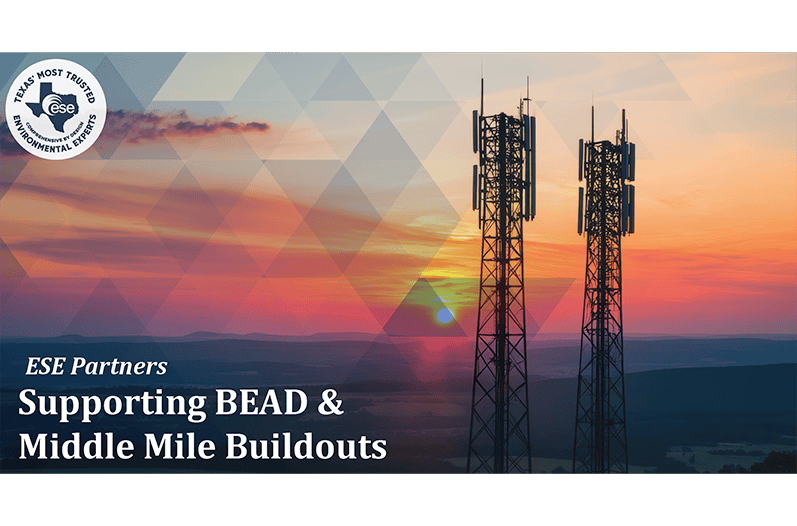
Texas is growing — fast. With new residents, expanding businesses, and increased demand for high-speed connectivity, broadband infrastructure has become essential to economic opportunity and community development. As BEAD funding and public–private investments accelerate deployment, a critical question is emerging across the state:
How do we expand broadband quickly while still protecting Texas’ natural and cultural resources?
For long linear projects like fiber builds, environmental due diligence is not a barrier — it’s a roadmap. It identifies constraints early, simplifies permitting, reduces redesigns, and gives project teams the clarity needed to keep construction moving.
Why Environmental Planning Matters for Broadband
Broadband development cuts across diverse Texas landscapes: river corridors, agricultural land, city streets, prairies, wetlands, and cultural resource sites. Proper environmental planning helps project teams:
- Avoid jurisdictional waters that trigger USACE permits
- Identify protected species habitat
- Document cultural resources early
- Plan for stormwater control and erosion prevention
- Maintain compliance during construction
Skipping these steps can delay construction, increase costs, or introduce compliance risks that slow deployment.
ESE Partners’ Role
ESE Partners supports Texas broadband projects through a comprehensive suite of environmental services, including:
- Desktop constraints analysis
- Wetlands and stream delineations
- Cultural resources surveys
- Threatened & endangered species reviews
- TCEQ stormwater permitting
- Construction-phase environmental oversight
Our team understands Texas’ regulatory landscape and the unique challenges of building long linear infrastructure. From early planning to final installation, we help streamline development with a proactive, solutions-first mindset.
A Texas-Wide Effort
Broadband expansion isn’t just about faster internet — it’s about economic mobility, educational access, public safety, healthcare connectivity, and community resilience. Whether in West Texas ranchland or dense urban corridors, responsible environmental planning ensures we build a digital network that serves Texans today and for generations to come.