Environmental due diligence often determines how smoothly a project moves from planning into execution. For flood control properties in Texas, that process can be especially important given the presence of drainage infrastructure, stormwater features, and evolving land use.
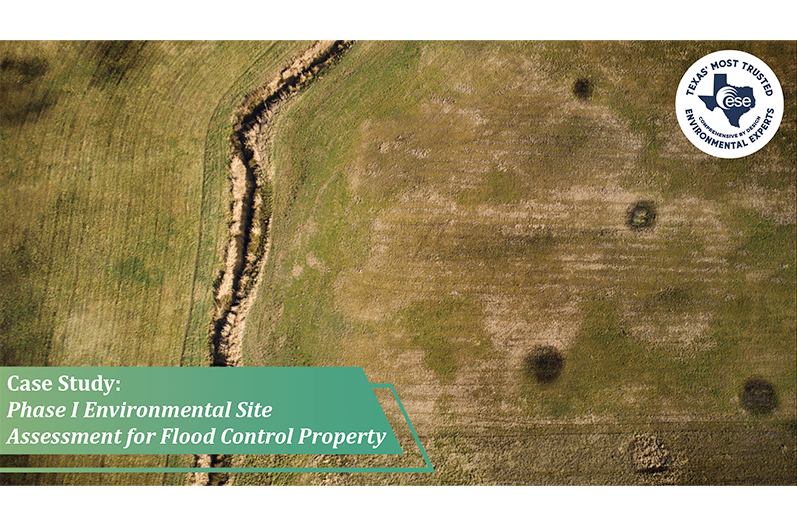
In this case, ESE Partners completed a Phase I Environmental Site Assessment for an approximately 4-acre flood control property in Southeast Texas. The goal was to support due diligence and provide a clear understanding of environmental conditions before any future decisions were made.
The assessment followed ASTM E1527-21 standards and included a comprehensive review of historical records, environmental databases, site reconnaissance, and coordination with agencies and stakeholders. While the records review did not indicate environmental concerns, the site visit revealed a small area of black residue on stormwater in one portion of the property.
Findings like this are exactly why site reconnaissance plays a critical role in environmental due diligence. Even when documentation suggests low risk, physical observations can introduce questions that require evaluation in the broader context of site history and conditions.
ESE’s team assessed the observation alongside historical use, database findings, and agency input. The property was determined to have historically been undeveloped land and is now utilized for flood control as a drainage easement with multiple drainage structures.
Ultimately, the assessment confirmed there were no recognized environmental conditions, no historical or controlled RECs, and no significant data gaps that would impact the property’s future use.
This type of clarity is critical for developers, municipalities, and agencies. It allows projects to move forward without unnecessary delays, reduces uncertainty during planning, and provides confidence that environmental risks have been properly evaluated.
Environmental strategy is not just about identifying problems. It is about providing clear answers early so projects can stay on schedule and aligned with regulatory expectations.
Click Here to read the full case study.