Before the first survey stake is placed or construction equipment arrives on site, the landscape has already shaped the opportunities and constraints of a project.
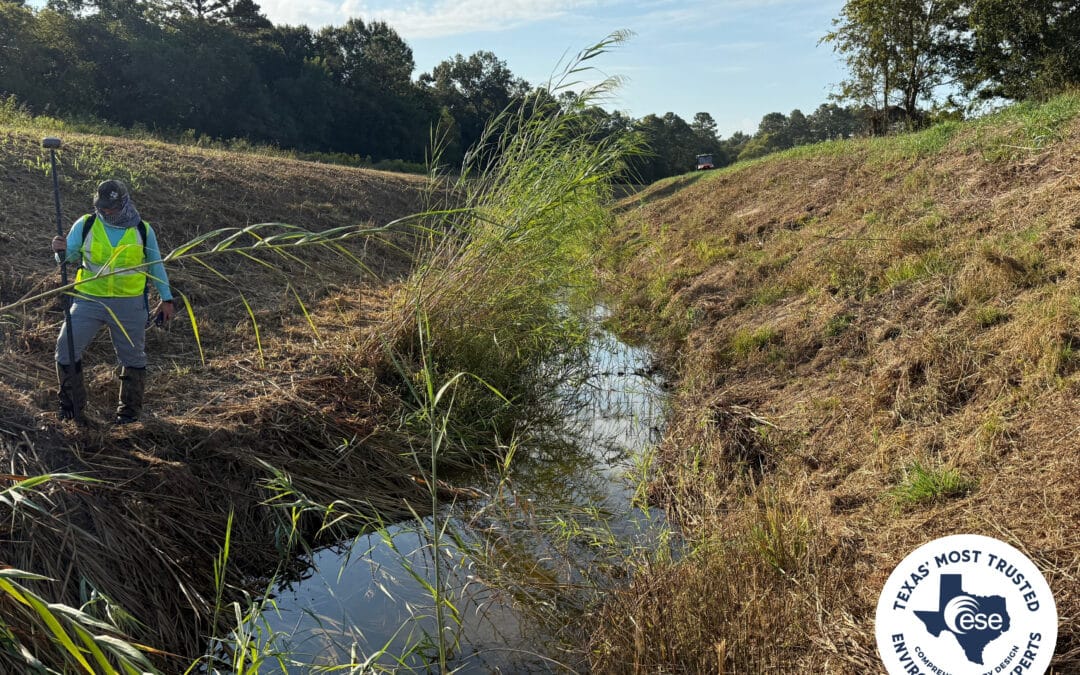
Across Texas, natural systems are constantly at work. Streams direct the movement of water across the landscape. Wetlands provide valuable ecological functions and help reduce flooding. Native vegetation supports wildlife habitat, while floodplains, soil conditions, and topography all influence how land responds to development.
These features are often overlooked because they operate quietly in the background. Yet they play a significant role in determining how projects are designed, permitted, and ultimately constructed.
Understanding these natural systems early is one of the most effective ways to reduce uncertainty throughout project development.
Every Site Has Its Own Environmental Story
No two project sites are exactly alike.
A parcel that appears suitable for development may contain jurisdictional waters, sensitive habitat, protected species, cultural resources, or other environmental constraints that affect permitting and design. Even subtle differences in terrain or drainage patterns can influence construction methods and regulatory requirements.
Identifying these conditions during the planning phase allows project teams to make informed decisions before engineering is finalized or construction begins.
Rather than reacting to unexpected discoveries later, developers and engineers can incorporate environmental considerations into the project from the start.
Environmental Planning Supports Better Decision-Making
Environmental planning is often viewed primarily as a regulatory requirement. In reality, it is also a valuable project management tool.
Understanding site conditions early can help teams:
- Identify environmental constraints before they impact design
- Anticipate permitting requirements
- Reduce the likelihood of project delays
- Improve coordination between engineering and environmental disciplines
- Better manage budgets and construction schedules
- Support more efficient regulatory review
When environmental information is available early, project teams gain greater flexibility in selecting alignments, refining designs, and developing realistic project timelines.
Working With Natural Systems Instead of Against Them
Texas encompasses an extraordinary diversity of landscapes, from coastal marshes and pine forests to rolling prairies, rivers, deserts, and the Hill Country.
Each landscape functions as part of a larger natural system that manages water movement, supports ecosystems, and contributes to long-term environmental health.
Projects that account for these systems during planning are often better positioned to minimize impacts, simplify permitting, and reduce unforeseen challenges during construction.
Rather than treating environmental features as obstacles, successful projects recognize them as important planning considerations that can inform better project decisions.
Reducing Risk Before Construction Begins
Many of the most costly project delays stem from issues that could have been identified earlier.
Unexpected wetlands, threatened species habitat, cultural resources, permitting requirements, or drainage concerns can all affect project schedules if discovered after design is substantially complete.
Early environmental assessments help reduce these risks by providing a clearer understanding of site conditions before significant investments are made in engineering and construction.
This proactive approach allows project teams to address potential challenges while they are still manageable, reducing uncertainty throughout the life of the project.
Supporting Smarter Development Across Texas
Whether the project involves transportation, utilities, commercial development, energy infrastructure, or public works, environmental planning is an essential part of successful project delivery.
At ESE Partners, our environmental professionals help clients understand the natural systems that influence their projects. Through environmental reviews, natural resource assessments, permitting support, and regulatory coordination, we help project teams identify potential constraints early and develop practical solutions that keep projects moving forward.
Texas landscapes are constantly working behind the scenes, shaping water movement, supporting habitat, and protecting downstream resources. By understanding these natural systems from the beginning, project teams can reduce risk, make more informed decisions, and move from planning to construction with greater confidence.