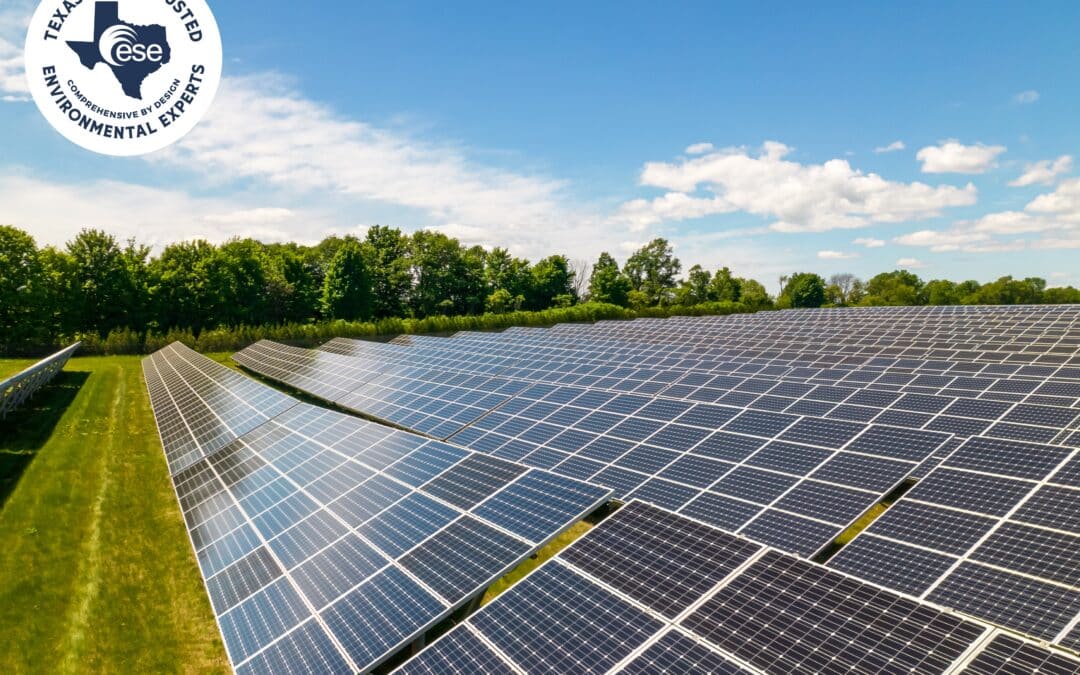
Renewable energy developers are continually looking for ways to identify viable project sites while maximizing financial incentives and minimizing development risk. In recent years, brownfield properties have become increasingly attractive for solar, wind, and battery energy storage system (BESS) projects.
These previously developed or potentially contaminated properties often offer existing infrastructure, favorable locations, and opportunities to return underutilized land to productive use. In addition, federal incentive programs have created new financial opportunities for qualifying renewable energy developments located on eligible sites.
As a result, environmental due diligence has become more than a permitting requirement. It is now an important part of project planning and financial strategy.
Why Brownfields Are Gaining Attention
Brownfields are properties where redevelopment or reuse may be complicated by the presence or potential presence of hazardous substances, pollutants, or contaminants.
While these sites can present environmental challenges, they also offer significant redevelopment opportunities. Many brownfields are already located near existing roads, utility corridors, substations, and transmission infrastructure, making them attractive candidates for renewable energy development.
Redeveloping these sites can reduce development pressure on undeveloped land while bringing new economic value to previously underutilized properties.
The Inflation Reduction Act and Energy Community Bonus Credit
The Inflation Reduction Act (IRA) introduced several incentives designed to accelerate renewable energy development.
Among them is the IRS Energy Community Bonus Credit, which allows certain qualifying renewable energy projects to receive increased federal tax incentives when they are located within designated energy communities. Eligible brownfield sites may qualify under one of these categories, provided they satisfy applicable IRS guidance and regulatory requirements.
Because eligibility depends on specific site conditions and documentation, developers often begin evaluating these requirements early in the site selection process.
Environmental Due Diligence Supports More Than Permitting
Environmental due diligence has always been a critical part of responsible site selection. Today, it also plays an important role in supporting potential project incentives.
A thorough environmental review helps developers understand existing site conditions while assembling the documentation needed to evaluate brownfield eligibility.
Common components of this process include:
- Phase I Environmental Site Assessments (ESAs)
- Phase II Environmental Site Assessments, when warranted
- Historical property research
- Site characterization
- Evaluation of recognized environmental conditions (RECs)
- Review of available regulatory records
- Assessment of potential environmental constraints
Together, these efforts provide a clearer understanding of site conditions and help project teams make informed development decisions.
Reducing Risk Early in Project Development
Environmental considerations influence many aspects of renewable energy development beyond tax incentives.
Early due diligence can help identify permitting requirements, remediation considerations, environmental liabilities, and potential design constraints before they affect project schedules or financing.
By understanding these issues during site acquisition and early planning, developers can better evaluate project feasibility and reduce the likelihood of unexpected delays later in development.
This proactive approach supports stronger project planning while providing greater certainty for investors, lenders, and development partners.
Supporting Renewable Energy Development Across Texas and Beyond
Texas continues to lead the nation in renewable energy development, with growing investment in utility-scale solar, wind generation, and battery energy storage systems. As developers seek new locations for these facilities, previously impacted properties are becoming an increasingly important part of the development landscape.
Successfully redeveloping brownfield sites requires coordination between environmental professionals, developers, engineers, legal teams, and regulatory agencies. Environmental due diligence helps ensure that potential site risks are understood, documentation is complete, and projects remain positioned for successful permitting and development.
At ESE Partners, we support renewable energy developers, landowners, and project teams with Phase I and Phase II Environmental Site Assessments, environmental reviews, site characterization, permitting support, and environmental documentation for solar, wind, and BESS projects. Whether evaluating a greenfield site or a potential brownfield redevelopment opportunity, our team helps clients navigate environmental considerations so projects can move forward with confidence.
As renewable energy development continues to evolve, environmental due diligence remains one of the most valuable tools for identifying opportunities, managing risk, and supporting successful project delivery.