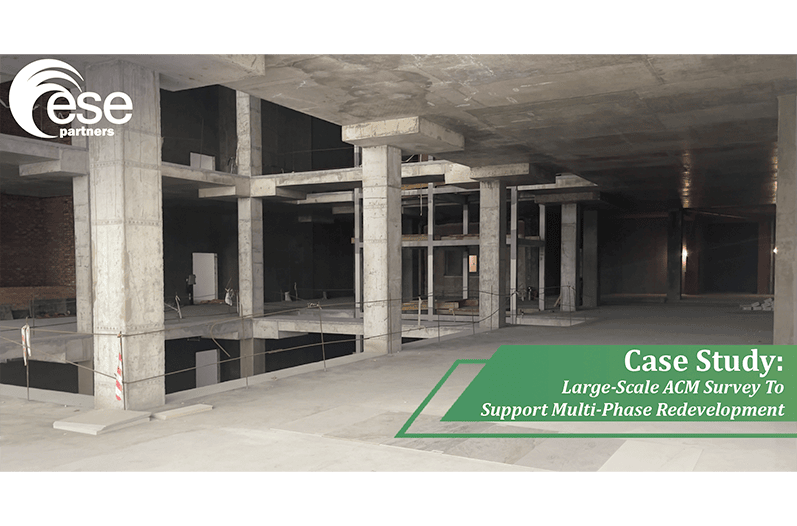
Large retail redevelopments often span multiple construction eras, tenant configurations, and renovation histories. Flooring systems evolve, mechanical spaces are modified, and materials are layered over decades — creating hidden regulatory and cost risk long before demolition begins.
On a major regional shopping center in Houston, ESE Partners was engaged to support a multi-phase redevelopment by delivering a comprehensive asbestos-containing materials survey across the entire property footprint. The assessment included common corridors, service hallways, roof systems, mechanical spaces, and a wide range of tenant suites, both active and vacant.
The challenge wasn’t simply identifying asbestos. It was doing so methodically and consistently across hundreds of locations with varied materials, concealed substrates, and prior remodel conditions — while producing documentation that could actually support design, permitting, and construction sequencing.
ESE’s findings included multiple Category I non-friable ACMs such as flooring mastics, coatings, HVAC duct mastic, and roofing materials. By summarizing materials by category, condition, and estimated quantity, the redevelopment team gained early visibility into abatement needs, management-in-place considerations, and future destructive investigation requirements.
The final deliverable was a renovation-ready ACM inventory aligned with TAHPR, NESHAP, and EPA MAP requirements — complete with analytical results, diagrams, photo documentation, and clear guidance for implementation.
For large commercial projects, this level of planning protects more than compliance. It protects schedules, budgets, and decision-making across every redevelopment phase.
To go to the full Case Study, click Here.