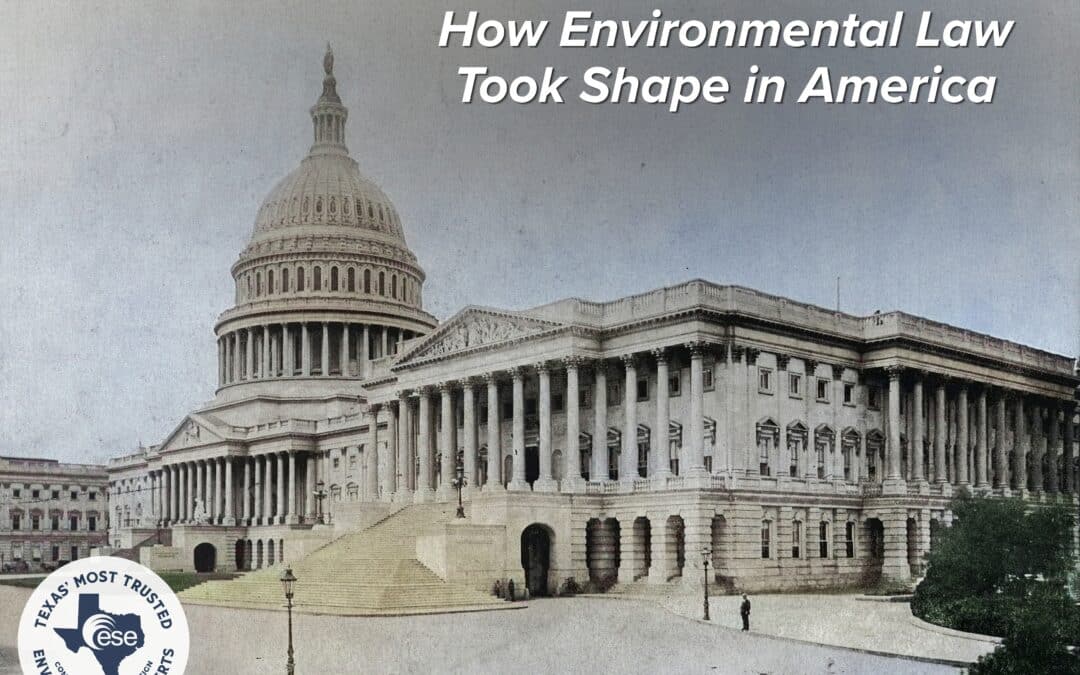
Environmental regulation is often viewed as something that has always existed. In reality, the regulatory framework that governs today’s infrastructure and development projects was established remarkably quickly during the early 1970s.
Prior to that period, environmental protection in the United States was largely fragmented. States and local governments addressed issues independently, with much of the focus centered on immediate public health concerns rather than long-term environmental planning. There was no unified federal system for evaluating how major projects could affect natural resources, water quality, air quality, or ecosystems.
That changed within just a few years.
A New Era of Environmental Policy
The turning point began in 1970 with the passage of the National Environmental Policy Act (NEPA). For the first time, federal agencies were required to evaluate the environmental impacts of major actions before decisions were made. Environmental review became part of project planning rather than an afterthought.
Later that same year, the Environmental Protection Agency (EPA) was established, bringing together federal environmental responsibilities under a single agency and creating a more coordinated national approach to environmental protection.
Congress quickly followed with additional landmark legislation that still forms the backbone of environmental regulation today:
- 1970: Major amendments to the Clean Air Act strengthened national air quality standards.
- 1972: The Clean Water Act established a comprehensive framework for protecting the nation’s waters.
- 1973: The Endangered Species Act created protections for threatened and endangered species and their habitats.
In just a few years, the United States built the legal foundation that continues to guide environmental permitting, compliance, and project development more than five decades later.
More Than New Regulations
The significance of this period extends beyond the passage of individual laws.
These statutes fundamentally changed how projects are planned.
Rather than addressing environmental issues only after construction had begun or impacts had already occurred, environmental considerations became integrated into the decision-making process itself. Project owners, engineers, developers, and public agencies were now expected to evaluate environmental constraints early, coordinate with regulatory agencies, and incorporate environmental planning into project design.
This shift transformed environmental compliance from a reactive exercise into a strategic component of successful project delivery.
Why It Still Matters Today
Although these laws were enacted over 50 years ago, they continue to influence nearly every major infrastructure and development project in the United States.
Transportation improvements, water infrastructure, energy facilities, commercial developments, and public works projects all rely on environmental review, permitting, and regulatory coordination to move forward successfully.
As Texas continues to experience rapid population growth, expanding infrastructure needs, increasing energy demands, and evolving water resource challenges, environmental planning has become even more critical. Early identification of environmental constraints can help reduce project risk, streamline permitting, minimize delays, and improve overall project outcomes.
Supporting Projects Within Today’s Regulatory Framework
Understanding environmental regulations is no longer simply about meeting compliance requirements. It is about helping projects move efficiently from concept through design, permitting, construction, and completion.
At ESE Partners, our professionals work within this regulatory framework every day. From environmental reviews and permitting to natural and cultural resource assessments, compliance, and remediation, we help clients navigate environmental requirements early so projects can move forward with clarity, compliance, and confidence.
More than half a century after these landmark laws reshaped environmental policy, their impact continues to influence how Texas builds the infrastructure and communities of tomorrow.