What Is Mold Consulting?
Mold consulting is professional support that helps property stakeholders evaluate suspected mold conditions, determine the cause (moisture), define response actions, and document decisions for business, legal, and risk-management purposes.
In commercial settings, consulting typically includes:
- Building moisture diagnostics (leaks, condensation, HVAC humidity control, envelope issues)
- Visual assessment and targeted investigation planning
- Mold/IAQ sampling strategy (when appropriate) and data interpretation
- Remediation scope and protocol development
- Contractor oversight/owner’s rep support
- Post-remediation verification (PRV) and documentation to support re-occupancy
EPA’s commercial guidance emphasizes that effective response focuses on fixing moisture problems and performing appropriate cleanup/remediation—not just testing.
Request Your Mold Consulting Services Today
Texas’ most trusted environmental experts – comprehensive by design.
When Is It Required?
Mold consulting is commonly triggered by commercial real estate transactions, including acquisitions, refinancing, and portfolio due diligence, especially when mold is suspected, disclosed, or raised by a lender or investor. It may also be needed in response to tenant complaints involving odors, visible growth, health concerns, or threatened claims, as well as water intrusion events such as roof leaks, plumbing failures, flooding, or HVAC condensate issues. Mold concerns can also arise from construction defects, building envelope failures, or disputes over pre-remediation scope between owners, contractors, tenants, and insurers. After remediation, consulting support is often used to help inform re-occupancy decisions, particularly in sensitive occupancies. EPA guidance for schools and commercial buildings is frequently used as a defensible reference point for commercial mold projects.
ESE Partners’ Approach
ESE Partners approaches mold as a moisture-driven building performance problem with real business impacts, not simply a “mold test only” exercise. Clients value our fast mobilization across Texas, including Houston, Dallas–Fort Worth, Austin, San Antonio, and statewide, along with clear communication tailored to owners, brokers, attorneys, lenders, and other deal team members. Our team develops practical scopes that focus on identifying and addressing the underlying moisture source while limiting unnecessary demolition. We also provide defensible documentation aligned with widely used industry guidance and consensus standards, supported by an independent, third-party perspective that helps reduce conflicts between stakeholders.
Our Process
- Intake & risk triage: Building history, prior leaks, occupant impacts, schedule constraints
- Site visit & moisture assessment: Visual inspection + moisture mapping; identify likely moisture pathways
- Investigation plan (as needed): Targeted openings and sampling plan focused on decision-making
- Findings & recommendations: Source control actions, interim containment/controls, repair priorities
- Remediation protocol & scope support: Work methods, containment, engineering controls, waste handling approach
- Oversight (optional): Observe critical steps; adjust scope if conditions change
- Post-remediation verification (PRV): Visual clearance and verification strategy suitable for the space/use
- Closeout documentation: Report package for stakeholders (owner/lender/tenant/legal)
Regulatory Framework & Industry Guidance
Mold is typically addressed through a combination of guidance documents and industry consensus standards rather than a single universal federal “mold law” that applies to all buildings. Commonly referenced frameworks include the EPA’s Mold Remediation in Schools and Commercial Buildings, which provides commercial remediation guidance and a practical decision framework, as well as the EPA’s A Brief Guide to Mold, Moisture and Your Home, which outlines general best practices for moisture control and appropriate cleanup concepts. In addition, ANSI/IICRC standards are widely used across restoration and remediation practice, with IICRC publishing ANSI-accredited consensus standards that help define industry best practices.
Risks of Not Completing Mold Consulting
Skipping independent mold consulting can create avoidable exposure, including:
- Deal delays or retrades due to unanswered moisture/mold questions
- Open-ended remediation costs from poorly defined scope
- Tenant disputes and business interruption
- Repeat growth if the moisture source isn’t corrected (leading to rework)
- Documentation gaps that complicate lender, insurer, or legal scrutiny
Moisture control plus appropriate remediation is what prevents recurrence.
More Building Sciences Services

Asbestos Containing Material (ACM) Surveys
Once widely used in construction, insulation, and fire protection, asbestos is a known carcinogen. Regardless of the construction date, federal, state, and municipal regulations require building and facility owners to assess and manage the presence or potential presence of asbestos-containing materials (ACM). ESE provides a broad set of asbestos consulting services to public and private sector clients, giving you actionable results, not just reports.

Lead & Lead-Based Paint Consulting Services
Lead and lead compounds have historically been used in paints, coatings, ceramics, pipes, and plumbing materials across numerous structures. ESE’s accredited professionals provide timely, cost-effective solutions to lead-related issues, whether you are preparing for renovation, managing an existing facility, or responding to regulatory requirements.
Industries We Serve
ESE operates in a wide range of industries, all with unique needs and regulatory obligations. We offer experts who understand the broad complexity of environmental challenges faced by today’s businesses.

Real Estate Brokers & Developers
ESE helps brokers and developers reduce deal friction and avoid surprises through fast, defensible environmental due diligence. We support property evaluations, redevelopment risk screening, and transaction-ready reporting for Texas assets.

Private Equity/Capital Investors
Transaction support for acquisitions and portfolio oversight, including Phase I/II ESAs and risk-based evaluation. We provide clear findings, practical recommendations, and scalable diligence support.

Financial Institutions
ESE supports lender-driven environmental due diligence and portfolio risk management, including Phase I/II ESAs and risk screening. We deliver consistent, defensible reporting aligned with credit and closing timelines.

Attorneys
Technical support for environmental risk, liability evaluation, and regulatory strategy. We provide clear documentation and expert collaboration to support transactions, compliance matters, and remediation planning.
Why ESE Partners
Texas’ Most Trusted Environmental Experts – Comprehensive by Design.
ESE Partners is built for fast-moving, high-stakes mold consulting and building sciences projects. Our Texas-focused consulting teams understand local building types, moisture conditions, and transaction timelines, allowing us to respond quickly and practically. ESE offers end-to-end capability across environmental due diligence, industrial hygiene and building sciences support, compliance, and remediation management, giving clients one coordinated resource for related environmental needs. We provide independent, practical recommendations that help stakeholders make informed decisions rather than simply generating data. With scalable statewide delivery, ESE supports single assets and portfolios across Houston, Dallas–Fort Worth, Austin, San Antonio, and beyond.
Need a defensible mold scope or fast assessment to keep your project moving?
Request a proposal within 24 hours—ESE Partners can mobilize quickly across Texas to assess conditions, define the moisture driver, and support a practical path to resolution.
Our Building Sciences Projects

Lead Dust Cleaning Protocol for Manufacturing Operations
ESE developed a Lead Dust Cleaning Protocol for a Texas manufacturing facility where select employees regularly handle lead components as part of routine production tasks.

Comprehensive Asbestos Survey: Houston High-Rise Renovation
A commercial real estate owner was considering a large-scale renovation of a commercial high-rise office building in downtown Houston. ESE Partners was engaged to conduct a full-building asbestos survey across all interior levels and accessible roof areas.
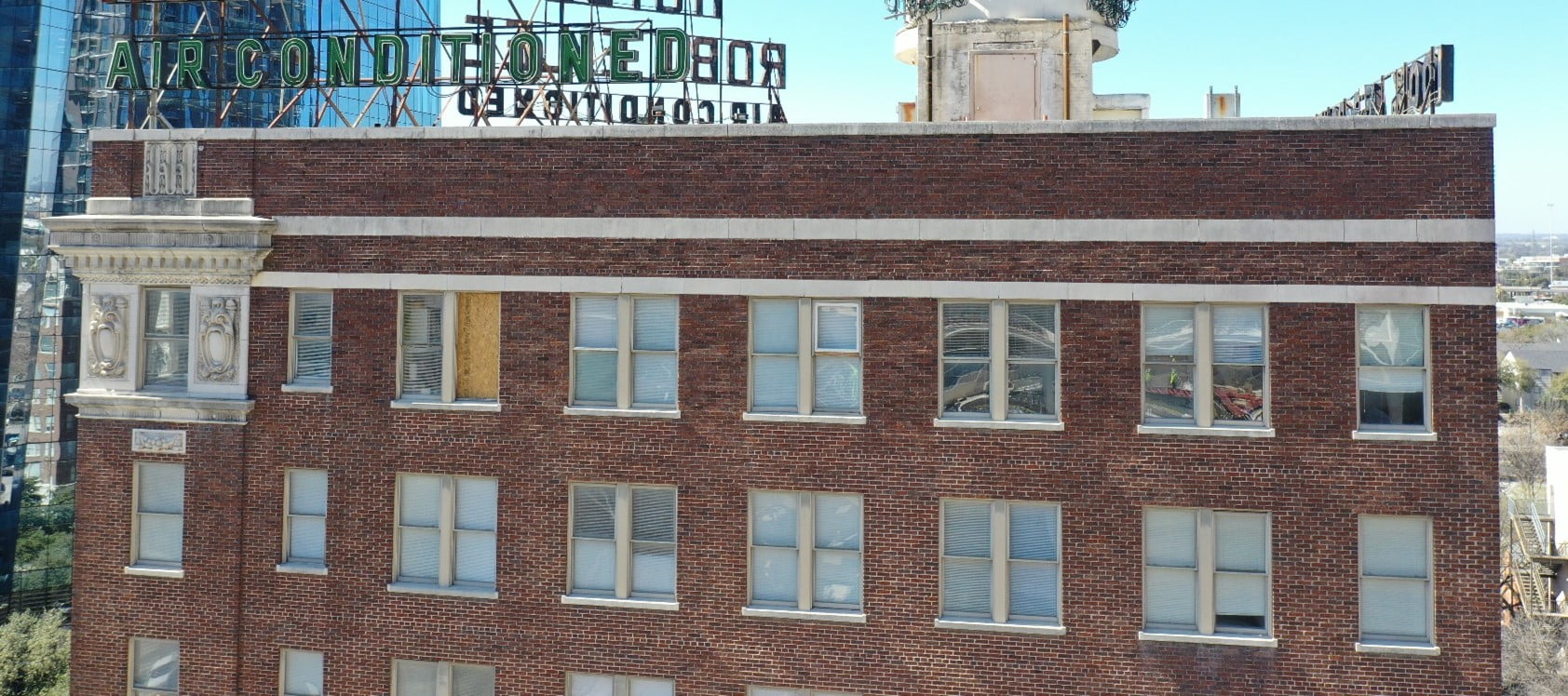
Property Condition Assessment of Historic Hotel
ESE recently completed a Property Condition Assessment (PCA) of a historic hotel which was originally constructed in 1923.
Frequently Asked Questions About Mold Consulting Services
What does mold consulting actually involve for a commercial property?
Mold consulting is professional support that helps property stakeholders evaluate suspected mold conditions, determine the cause (moisture), define response actions, and document decisions for business, legal, and risk-management purposes. In commercial settings, consulting typically includes building moisture diagnostics (leaks, condensation, HVAC humidity control, envelope issues), visual assessment and targeted investigation planning, mold/IAQ sampling strategy (when appropriate) and data interpretation, remediation scope and protocol development, contractor oversight and owner’s rep support, and post-remediation verification (PRV) and documentation to support re-occupancy. Importantly, EPA’s commercial guidance emphasizes that effective response focuses on fixing moisture problems and performing appropriate cleanup/remediation — not just testing.
When does a commercial property need mold consulting support?
Mold consulting is commonly triggered by commercial real estate transactions, including acquisitions, refinancing, and portfolio due diligence, especially when mold is suspected, disclosed, or raised by a lender or investor. It may also be needed in response to tenant complaints involving odors, visible growth, health concerns, or threatened claims, as well as water intrusion events such as roof leaks, plumbing failures, flooding, or HVAC condensate issues. Mold concerns can also arise from construction defects, building envelope failures, or disputes over pre-remediation scope between owners, contractors, tenants, and insurers. After remediation, consulting support is often used to help inform re-occupancy decisions, particularly in sensitive occupancies.
What are the risks of skipping independent mold consulting?
Skipping independent mold consulting can create avoidable exposure, including deal delays or retrades due to unanswered moisture and mold questions, open-ended remediation costs from poorly defined scope, tenant disputes and business interruption, repeat growth if the moisture source isn’t corrected (leading to rework), and documentation gaps that complicate lender, insurer, or legal scrutiny. Moisture control plus appropriate remediation is what prevents recurrence — and mold issues can freeze a transaction, trigger tenant disputes, and create operational downtime, especially when moisture intrusion is active or documentation is unclear.
What does ESE Partners' mold consulting process look like from start to finish?
ESE Partners approaches mold as a moisture-driven building performance problem with real business impacts — not simply a “mold test only” exercise. Their process develops practical scopes that focus on identifying and addressing the underlying moisture source while limiting unnecessary demolition, supported by defensible documentation aligned with widely used industry guidance and consensus standards. The full process includes: intake and risk triage (building history, prior leaks, occupant impacts, schedule constraints); site visit and moisture assessment (visual inspection and moisture mapping; identify likely moisture pathways); investigation plan as needed (targeted openings and sampling plan focused on decision-making); findings and recommendations (source control actions, interim containment/controls, repair priorities); remediation protocol and scope support (work methods, containment, engineering controls, waste handling approach); optional oversight (observe critical steps; adjust scope if conditions change); post-remediation verification (PRV) with visual clearance and verification strategy suitable for the space/use; and closeout documentation (report package for stakeholders including owner, lender, tenant, and legal).