What Is Remediation Design & Implementation?
Remediation design and implementation is the process of developing, permitting, managing, and documenting corrective actions to address impacted soil, groundwater, sediment, surface water, or vapor conditions at a contaminated property.
A remediation project typically follows environmental due diligence or site investigation work, such as a Phase II ESA, affected property assessment, release investigation, or regulatory compliance review. The objective is to reduce environmental risk, satisfy applicable regulatory requirements, protect human health and the environment, and support the client’s business goal—whether that means closing a real estate transaction, redeveloping a property, maintaining operations, or obtaining regulatory closure.
In Texas, many remediation projects are evaluated under the Texas Risk Reduction Program (TRRP), 30 TAC Chapter 350, which establishes response action requirements for TCEQ remediation program areas.
Request Your Remediation Design & Implementation Today
Texas’ most trusted environmental experts – comprehensive by design.
When Is Remediation Design & Implementation Required?
Remediation may be needed when environmental impacts are identified through due diligence, operations, redevelopment planning, or regulatory review. Common triggers include:
- Commercial real estate transactions where contamination could affect closing, lending, or indemnity negotiations
- Phase II ESA findings showing impacted soil, groundwater, or vapor conditions
- Brownfield redevelopment requiring cleanup planning before construction or reuse
- Industrial facility corrective action tied to historical releases, spills, or waste management practices
- Underground storage tank releases involving petroleum hydrocarbons in soil or groundwater
- TCEQ regulatory programs requiring investigation, response action, or closure documentation
- Lender or investor requirements before acquisition, refinancing, or recapitalization
- Construction projects encountering impacted soils, groundwater, or unknown subsurface conditions
- Property disposition where sellers need to define, manage, or limit environmental liability
- Risk-based closure strategies where complete removal is not necessary or cost-effective
ESE Partners’ Approach
Texas’ Most Trusted Environmental Experts – Comprehensive by Design
ESE Partners designs remediation strategies around one core principle: the remedy should solve the problem without overbuilding the solution. Our team develops practical, defensible remedies that align with site conditions, regulatory expectations, transaction timelines, and client risk tolerance. We understand that remediation is rarely just a technical exercise; it is often tied to a closing date, construction schedule, enforcement deadline, or financing milestone.
ESE’s approach emphasizes right-sized remedial design based on actual exposure pathways, chemicals of concern, affected media, and site use, supported by Texas regulatory expertise in TCEQ program navigation and TRRP-based closure strategy. We communicate clearly with owners, lenders, attorneys, contractors, and regulators, while helping control costs through phased scopes, competitive subcontractor management, and practical field decisions. With schedule awareness for real estate, development, energy, and infrastructure projects, ESE prepares closure-focused documentation that supports regulatory review, lender confidence, and future property transactions.
Our Process
- Review Site Data & Objectives: ESE evaluates existing Phase I ESA, Phase II ESA, analytical data, historical operations, release documentation, and client goals.
- Define Regulatory Pathway: We identify the appropriate TCEQ, EPA, or site-specific regulatory framework and determine whether the project requires voluntary cleanup, corrective action, risk-based closure, or other response action.
- Develop Remedial Strategy: Our team compares cleanup alternatives based on contaminant type, media affected, exposure pathways, cost, schedule, constructability, and closure requirements.
- Prepare Remediation Design: ESE develops technical specifications, drawings, work plans, health and safety considerations, waste management procedures, confirmation sampling plans, and implementation sequencing.
- Coordinate Regulatory Submittals: When required, we prepare and submit work plans, response action plans, affected property assessment documentation, or closure reports to the applicable agency.
- Implement the Remedy: ESE manages field execution, subcontractors, excavation, treatment systems, monitoring, waste characterization, transportation, disposal, and confirmation sampling.
- Document Results & Support Closure: We prepare clear, defensible reports documenting completed work, analytical results, waste manifests, remedy performance, and closure recommendations.
Regulatory Framework
Remediation projects must be designed around the correct regulatory pathway. In Texas, that often includes a combination of state and federal requirements depending on the source, media, contaminants, and property use.
Relevant frameworks may include:
Texas Risk Reduction Program (TRRP), 30 TAC Chapter 350
TCEQ’s risk-based framework for evaluating affected properties and response actions.
TCEQ remediation programs
Multiple remediation program areas may apply depending on the type of site, release, contaminant, and regulatory history.
TCEQ remediation rules
TCEQ rules govern assessment and cleanup of contaminated properties.
RCRA Corrective Action
May apply to certain facilities that treated, stored, or disposed of hazardous waste and have historical releases requiring corrective action.
CERCLA / Superfund
May apply to sites with hazardous substance releases requiring federal or state-led response action.
Underground Storage Tank regulations
May apply to petroleum storage tank releases involving soil or groundwater impacts.
Brownfields programs
May support redevelopment planning, assessment, and cleanup for eligible properties.
ESE helps clients determine which framework applies and how to pursue the most efficient path toward risk management, construction readiness, or regulatory closure.
Common Remediation Technologies & Strategies
Depending on site conditions, ESE may evaluate and implement remedies such as:
- Excavation and off-site disposal
- In-situ chemical oxidation or reduction
- Soil vapor extraction
- Air sparging
- Dual-phase extraction
- Monitored natural attenuation
- Groundwater recovery and treatment
- Capping or engineered barriers
- Vapor mitigation systems
- Institutional controls or engineering controls
- Risk-based closure using commercial/industrial land-use assumptions
- Construction-phase environmental management plans
- Impacted soil and groundwater handling protocols
The best remedy is not always the most aggressive remedy. ESE focuses on matching the response action to the exposure pathway, regulatory endpoint, property use, and client objective.
Risks of Not Completing Remediation Design & Implementation
Failing to properly design and implement remediation can create avoidable financial, legal, and operational risk, including:
- Deal delays or failed closings when lenders, buyers, or attorneys cannot get comfortable with environmental conditions
- Unexpected cleanup costs if contamination is discovered during construction or after acquisition
- Regulatory exposure from incomplete response actions or inadequate documentation
- Construction delays caused by impacted soils, groundwater management issues, or waste disposal problems
- Reduced property value due to unresolved environmental conditions
- Lender concerns related to collateral risk and borrower obligations
- Future liability for owners, operators, sellers, or responsible parties
- Unclear closure status that complicates refinancing, sale, redevelopment, or long-term operations
A well-designed remediation strategy helps convert environmental uncertainty into a defined scope, budget, timeline, and regulatory path.
More Environmental Remediation Services

Risk-Based Evaluation & Regulatory Strategy
Risk-based corrective action (RBCA) evaluates contaminant characteristics, site conditions, and exposure pathways to determine the actual risk posed to potential receptors. In many cases, physical remediation can be avoided entirely when a thorough risk assessment demonstrates that contaminants pose no unacceptable threat under a site’s intended use.

Brownfields & Redevelopment Support
ESE Partners is committed to recycling the land and revitalizing cities and neighborhoods. Environmentally impacted properties carry hidden financial potential, and we help our clients unlock it through strategic environmental risk management and engineering.
Industries We Serve
ESE operates in a wide range of industries, all with unique needs and regulatory obligations. We offer experts who understand the broad complexity of environmental challenges faced by today’s businesses.

Real Estate Brokers & Developers
ESE helps brokers and developers reduce deal friction and avoid surprises through fast, defensible environmental due diligence. We support property evaluations, redevelopment risk screening, and transaction-ready reporting for Texas assets.

Private Equity/Capital Investors
Transaction support for acquisitions and portfolio oversight, including Phase I/II ESAs and risk-based evaluation. We provide clear findings, practical recommendations, and scalable diligence support.

Financial Institutions
ESE supports lender-driven environmental due diligence and portfolio risk management, including Phase I/II ESAs and risk screening. We deliver consistent, defensible reporting aligned with credit and closing timelines.

Attorneys
Technical support for environmental risk, liability evaluation, and regulatory strategy. We provide clear documentation and expert collaboration to support transactions, compliance matters, and remediation planning.
Why ESE Partners
ESE Partners is built for complex environmental projects where technical accuracy, responsiveness, and business judgment all matter. Clients choose ESE for Texas-focused remediation expertise across Houston, Dallas-Fort Worth, Austin, San Antonio, and statewide markets, supported by integrated environmental consulting services that include due diligence, site investigation, remediation, compliance, natural and cultural resources, and building sciences.
Our transaction-aware project management helps developers, brokers, lenders, attorneys, investors, and industrial clients keep remediation decisions aligned with deal, financing, and project timelines. ESE provides practical regulatory strategy rooted in TCEQ, EPA, and risk-based closure experience, along with responsive field teams capable of supporting fast-moving real estate, infrastructure, and energy projects. With clear communication that keeps stakeholders aligned and scalable resources for single-site cleanups, portfolio work, redevelopment projects, and ongoing compliance-driven remediation, ESE Partners is Texas’ Most Trusted Environmental Experts — Comprehensive by Design. We help clients move from contamination concerns to actionable solutions.
Need a remediation plan, cost estimate, or field implementation support?
Talk to ESE Partners today. Our team can evaluate your site conditions, identify the right regulatory path, and develop a practical remediation strategy that protects your project, your capital, and your timeline.
Our Environmental Remediation Projects

Environmental Health and Safety Plan for Utility and Roadway Improvements in PPCA Areas
ESE prepared a Site Environmental Health and Safety Plan designed specifically for utility construction activities conducted within Potentially Petroleum Contaminated Areas associated with LPST/PST conditions, providing a clear framework to protect workers, maintain safe operations, and support compliant field execution during active construction.
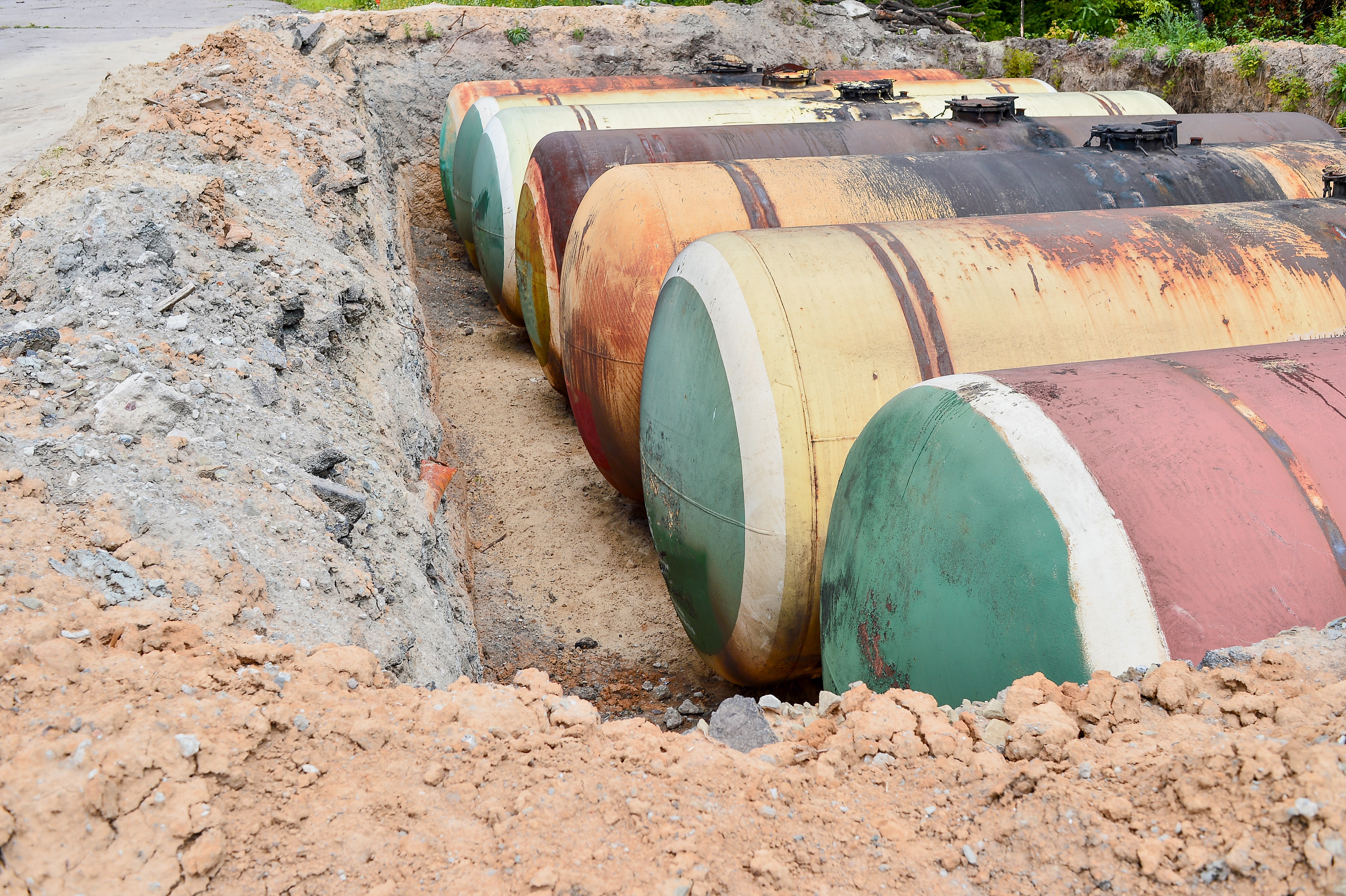
Tank Removal and Release Determination for Diesel UST
ESE completed a tank removal and release determination for a diesel underground storage tank at an active healthcare facility in Texas, delivering regulator-ready documentation to support compliant closure and reduce environmental liability.

EPA-Funded Brownfields QAPP and Sampling Plan for Municipal Redevelopment
ESE prepared a Quality Assurance Project Plan for an EPA-funded Brownfields effort supporting a municipal brownfields program, providing the quality framework and sampling plan needed to conduct limited subsurface investigations and produce defensible, regulator-ready data.
Frequently Asked Questions About Remediation Design & Implementation
What is remediation design and implementation?
Remediation design and implementation is the process of developing, permitting, managing, and documenting corrective actions to address impacted soil, groundwater, sediment, surface water, or vapor conditions at a contaminated property. A remediation project typically follows environmental due diligence or site investigation work — such as a Phase II ESA, affected property assessment, release investigation, or regulatory compliance review. The objective is to reduce environmental risk, satisfy applicable regulatory requirements, protect human health and the environment, and support the client’s business goal — whether that means closing a real estate transaction, redeveloping a property, maintaining operations, or obtaining regulatory closure. In Texas, many remediation projects are evaluated under the Texas Risk Reduction Program (TRRP), 30 TAC Chapter 350, which establishes response action requirements for TCEQ remediation program areas.
When is remediation design and implementation required?
Remediation may be needed when environmental impacts are identified through due diligence, operations, redevelopment planning, or regulatory review. Common triggers include commercial real estate transactions where contamination could affect closing, lending, or indemnity negotiations; Phase II ESA findings showing impacted soil, groundwater, or vapor conditions; brownfield redevelopment requiring cleanup planning before construction or reuse; industrial facility corrective action tied to historical releases, spills, or waste management practices; underground storage tank releases involving petroleum hydrocarbons in soil or groundwater; TCEQ regulatory programs requiring investigation, response action, or closure documentation; lender or investor requirements before acquisition, refinancing, or recapitalization; construction projects encountering impacted soils, groundwater, or unknown subsurface conditions; property disposition where sellers need to define, manage, or limit environmental liability; and risk-based closure strategies where complete removal is not necessary or cost-effective.
What are the risks of not properly designing and implementing remediation?
Failing to properly design and implement remediation can create avoidable financial, legal, and operational risk, including deal delays or failed closings when lenders, buyers, or attorneys cannot get comfortable with environmental conditions, unexpected cleanup costs if contamination is discovered during construction or after acquisition, regulatory exposure from incomplete response actions or inadequate documentation, construction delays caused by impacted soils, groundwater management issues, or waste disposal problems, reduced property value due to unresolved environmental conditions, lender concerns related to collateral risk and borrower obligations, future liability for owners, operators, sellers, or responsible parties, and unclear closure status that complicates refinancing, sale, redevelopment, or long-term operations. A well-designed remediation strategy helps convert environmental uncertainty into a defined scope, budget, timeline, and regulatory path.
What does ESE Partners' remediation process look like, and what technologies might be used?
ESE Partners designs remediation strategies around one core principle: the remedy should solve the problem without overbuilding the solution — emphasizing right-sized remedial design based on actual exposure pathways, chemicals of concern, affected media, and site use, supported by Texas regulatory expertise in TCEQ program navigation and TRRP-based closure strategy. The process includes: reviewing site data and objectives (Phase I/II ESA, analytical data, historical operations, release documentation, and client goals); defining the regulatory pathway (TCEQ, EPA, or site-specific framework — voluntary cleanup, corrective action, risk-based closure, or other response action); developing a remedial strategy (comparing cleanup alternatives based on contaminant type, media affected, exposure pathways, cost, schedule, constructability, and closure requirements); preparing the remediation design (technical specifications, drawings, work plans, health and safety considerations, waste management procedures, confirmation sampling plans, and implementation sequencing); coordinating regulatory submittals (work plans, response action plans, affected property assessment documentation, or closure reports); implementing the remedy (field execution, subcontractors, excavation, treatment systems, monitoring, waste characterization, transportation, disposal, and confirmation sampling); and documenting results and supporting closure. Depending on site conditions, remedies may include excavation and off-site disposal, in-situ chemical oxidation or reduction, soil vapor extraction, air sparging, dual-phase extraction, monitored natural attenuation, groundwater recovery and treatment, capping or engineered barriers, vapor mitigation systems, institutional or engineering controls, and risk-based closure — because the best remedy is not always the most aggressive remedy.