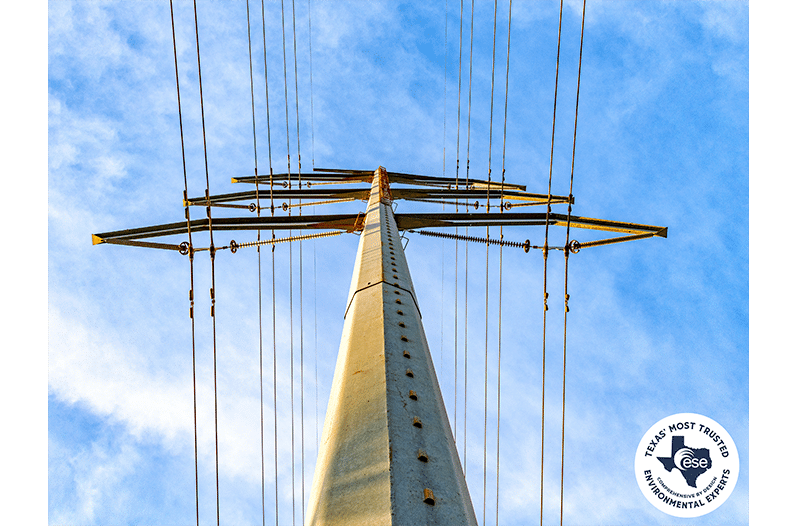
Texas’ Growing Energy Needs Create New Infrastructure Challenges
Texas is experiencing continued population growth, industrial expansion, and increasing electricity demand. From data centers and manufacturing facilities to residential and commercial development, these demands are placing additional pressure on the state’s electric infrastructure.
Meeting future electricity needs will require more than generating additional power. It will also involve developing and expanding the infrastructure necessary to deliver electricity where it is needed.
This includes new and expanded:
- Power generation facilities.
- Electric transmission lines.
- Electrical substations.
- Natural gas infrastructure supporting generation.
- Access roads and supporting utility infrastructure.
- Associated construction and maintenance facilities.
However, identifying a location for new infrastructure involves more than evaluating land availability, engineering requirements, and proximity to existing utilities.
Environmental conditions, permitting requirements, and regulatory constraints can all influence whether a proposed site or route is suitable for development.
For energy developers and project teams, understanding these considerations early can help reduce uncertainty and support more informed decisions throughout project planning.
Environmental Constraints Can Influence Where Infrastructure Is Built
Energy infrastructure projects can involve substantial land disturbance, construction activities, and long-term operational footprints. Depending on the project type and location, environmental resources may influence site selection, facility layout, transmission routing, and construction methods.
Evaluating these conditions before finalizing a project location or alignment gives developers an opportunity to identify potential constraints and consider alternatives.
Some of the most common environmental considerations include:
Wetlands and Other Waters
Transmission corridors, access roads, generation facilities, and supporting infrastructure may cross wetlands, streams, drainage features, or other aquatic resources.
Identifying these resources early can help determine whether additional field evaluations, jurisdictional assessments, or permits may be necessary.
Where impacts to regulated waters are proposed, federal or state authorizations may be required depending on the resource, jurisdiction, and nature of the proposed activity.
Threatened and Endangered Species
Texas contains a variety of habitats that support protected wildlife and plant species. Proposed development areas may overlap with suitable habitat or areas where protected species have been documented.
Biological evaluations can help identify potential concerns and determine whether additional surveys, consultations, or avoidance measures may be appropriate.
For projects involving federal agency actions, compliance with the Endangered Species Act may also be required when applicable.
Cultural and Historic Resources
Energy infrastructure development frequently involves ground-disturbing activities, including clearing, grading, trenching, and excavation.
These activities may affect archaeological sites, historic structures, or other cultural resources. Depending on the project and applicable federal involvement, cultural resource evaluations and coordination under Section 106 of the National Historic Preservation Act may be necessary.
Identifying potential cultural resource concerns early can help project teams evaluate alternative locations or routes before engineering and construction plans are finalized.
Floodplains and Drainage Conditions
Floodplain conditions and existing drainage patterns can affect the suitability of proposed development sites and infrastructure alignments.
Depending on the location and project scope, additional floodplain evaluations, drainage planning, or local approvals may be necessary.
Understanding these conditions during early site evaluation can help avoid design complications and identify potential construction considerations.
Environmental Planning for Different Types of Energy Infrastructure
Although generation facilities, transmission lines, and substations all support the electric grid, each type of development presents different environmental considerations.
Power Generation Facilities
New power generation facilities can involve large development footprints, equipment installations, fuel infrastructure, access roads, and supporting utilities.
Environmental planning may include evaluating:
- Air permitting requirements for combustion equipment and other emission sources.
- Wetlands, waters, and biological resources.
- Cultural and archaeological resources.
- Stormwater permitting and erosion control.
- Existing environmental conditions and potential site constraints.
For facilities using natural gas turbines or reciprocating engines, air permitting is often an important early consideration. Equipment specifications, emissions estimates, operating schedules, and facility configurations can influence applicable authorization requirements.
Evaluating these factors before final engineering can help project teams understand how environmental requirements may affect equipment selection, facility layout, and project schedules.
Electric Transmission Lines
Transmission projects present a different set of challenges because routes may extend across multiple counties, properties, and environmental settings.
Unlike a generation facility with a defined site boundary, a transmission corridor can encounter a wide variety of environmental and regulatory conditions along its length.
Route evaluations may need to consider:
- Wetlands and regulated waters.
- Protected species habitat.
- Archaeological sites and historic properties.
- Floodplains and drainage crossings.
- Land use and existing development.
- Construction access and temporary disturbance areas.
Early environmental screening and field evaluations can help identify potential constraints and provide information that supports route selection and engineering decisions.
Substations and Supporting Infrastructure
Substations and associated infrastructure may require additional land development, grading, drainage improvements, access roads, and utility connections.
Environmental considerations can include stormwater management, wetlands, biological resources, cultural resources, and existing site conditions.
Although substations may occupy smaller footprints than generation facilities or transmission corridors, their location and supporting construction activities can still trigger environmental review or permitting requirements.
Evaluating the site before acquisition or final design can help identify potential limitations and reduce the risk of unexpected changes.
Understanding Environmental Permitting and Regulatory Requirements
Environmental considerations are not limited to identifying sensitive resources. Energy projects may also require multiple environmental authorizations and agency reviews before construction can begin.
The applicable requirements depend on the project type, location, construction activities, operational characteristics, and any federal or state agency involvement.
Potential regulatory considerations may include:
Air Permitting: Generation facilities and certain supporting operations may require air authorizations through TCEQ or other applicable permitting programs.
Stormwater Permitting: Construction activities that disturb land may require coverage under an applicable construction stormwater permit. Industrial facilities may also have ongoing stormwater obligations during operation.
Water Resources Permitting: Projects involving impacts to regulated wetlands or other waters may require additional evaluations and authorizations.
Biological Resource Reviews: Projects with potential impacts to protected species may require additional evaluations, consultations, or avoidance measures.
Cultural Resource Reviews: Projects involving federal agency actions may require historic preservation review and coordination under applicable requirements.
Other Agency Approvals: Depending on the project, additional federal, state, local, or property-related approvals may be necessary.
Because these requirements can involve different agencies and review processes, early coordination is important for understanding the steps needed before construction.
Why Early Environmental Due Diligence Matters
One of the most important decisions in energy infrastructure development is determining where a project should be located or how it should be routed.
Once a site is acquired, a transmission alignment is selected, or engineering is significantly advanced, changes can become increasingly complicated and expensive.
Environmental due diligence helps project teams identify potential constraints before major development decisions are finalized.
An early evaluation may include reviewing available environmental records, assessing site conditions, identifying nearby regulated resources, and determining whether additional field studies or agency coordination may be needed.
This information can help developers:
Evaluate Site and Route Alternatives: Environmental constraints can be considered alongside engineering, land availability, and utility requirements when comparing potential locations.
Identify Potential Permitting Requirements: Understanding applicable authorizations early helps project teams develop a more realistic permitting strategy.
Improve Project Scheduling: Identifying necessary studies, agency reviews, and permitting milestones allows environmental requirements to be incorporated into development schedules.
Reduce the Risk of Redesign: Early identification of resource constraints can help avoid situations where proposed layouts or routes must be substantially revised.
Support Investment Decisions: Environmental due diligence can provide additional information about potential site limitations and regulatory obligations before significant capital is committed.
Early environmental planning does not guarantee that a project will receive every necessary approval or eliminate the possibility of delays. It provides project teams with a better understanding of potential challenges and the opportunity to address them proactively.
Supporting Energy Infrastructure Development Across Texas
As Texas continues to expand its electric infrastructure, developers need environmental support that considers the full scope of project development.
ESE Partners provides environmental consulting services to support generation facilities, transmission infrastructure, substations, and other energy-related development projects.
Our professionals work across multiple disciplines to help clients identify environmental constraints, evaluate regulatory requirements, and navigate permitting processes.
Our services include:
Environmental Due Diligence: Environmental assessments, regulatory reviews, and site evaluations supporting property acquisition, site selection, and project planning.
Natural Resources: Wetland delineations, waters assessments, biological evaluations, threatened and endangered species assessments, and other natural resource studies.
Cultural Resources: Archaeological surveys, historic resource evaluations, and cultural resource coordination.
Air Permitting and Compliance: Air permit applicability evaluations, emissions calculations, permit applications, and ongoing regulatory compliance support for applicable generation and industrial facilities.
Stormwater and Environmental Compliance: Construction and industrial stormwater permitting support, SWP3 development, inspections, and environmental management.
Corrective Action: Environmental investigation and remediation support when existing site conditions or identified concerns require additional evaluation.
By coordinating environmental services across these disciplines, ESE helps project teams understand potential constraints and incorporate environmental considerations into development decisions.
Planning for the Next Phase of Texas Energy Development
The future of Texas energy infrastructure will depend not only on how much new generation and transmission capacity is developed, but also on where projects can be located and how efficiently they can move through planning, permitting, and construction.
Environmental conditions and regulatory requirements are an important part of that process.
For developers, utilities, engineering firms, and other project stakeholders, identifying potential environmental constraints early can provide valuable insight into site feasibility, route selection, project schedules, and permitting strategy.
ESE Partners helps energy and infrastructure teams navigate environmental considerations from early site evaluations and permitting through project development and ongoing compliance. By bringing environmental specialists into the planning process early, project teams can make more informed decisions about where and how infrastructure moves forward.